सारनाथ

Sarnath — Museum

Discover
Sarnath Deer Park
3rd Century BCE
Mrigadava — The Sacred Deer Park
Sarnath Museum
Archaeological Museum
Sarnath Heritage
Buddhist Heritage

About Sarnath

Sarnath, located approximately 10 kilometers from Varanasi, is a profoundly significant pilgrimage site for Buddhists worldwide. It holds an unparalleled place in history as the location where Gautama Buddha delivered his first sermon, "The First Turning of the Wheel of Dharma," after attaining enlightenment in Bodh Gaya.

This momentous event marked the foundation of the Buddhist Sangha (community of monks) and the beginning of the propagation of his teachings. Sarnath was historically known as Mrigadava (Deer Park) or Isipatana (where holy men fell to earth).

The site flourished as a major center of art, culture, and learning for centuries, notably under Emperor Ashoka in the 3rd century BCE, who erected numerous monuments, and through the Gupta period. The ruins were eventually destroyed by Turkic invasions and fell into neglect until archaeological excavations and the efforts of the Maha Bodhi Society in the 20th century restored its prominence.

मृगदाव

Deer Park & Archaeological Ruins
Sacred ground where the Wheel of Dharma was first set in motion

Deer Park
01
01

Deer Park (Mrigadava)

The Serene Forest of the First Sermon

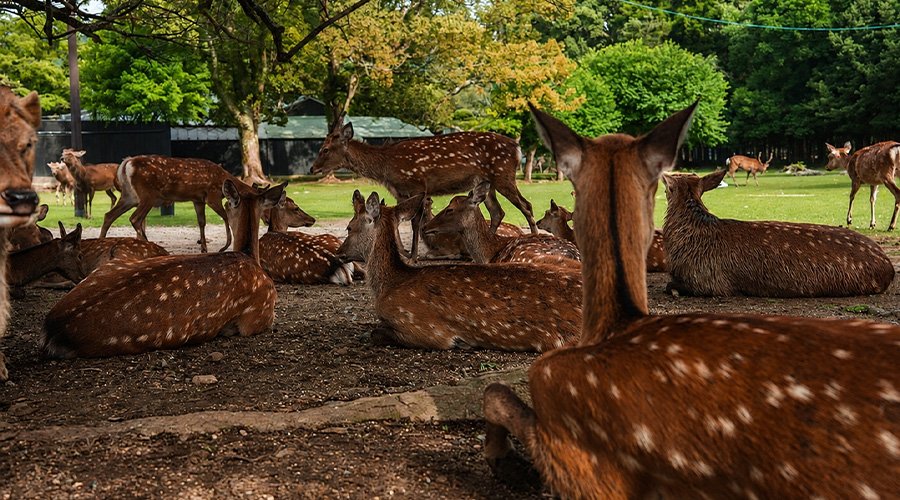
The term Deer Park refers to the historical forest area where the Buddha gave his first sermon. Today, it encompasses the main complex of archaeological ruins and maintained parkland. A small, modern-day Deer Park remains, established as an open animal park, allowing visitors to see deer roaming freely, paying homage to its ancient name and spiritual story. The atmosphere here is purposefully serene, inviting reflection.

Dhamek Stupa
02
02

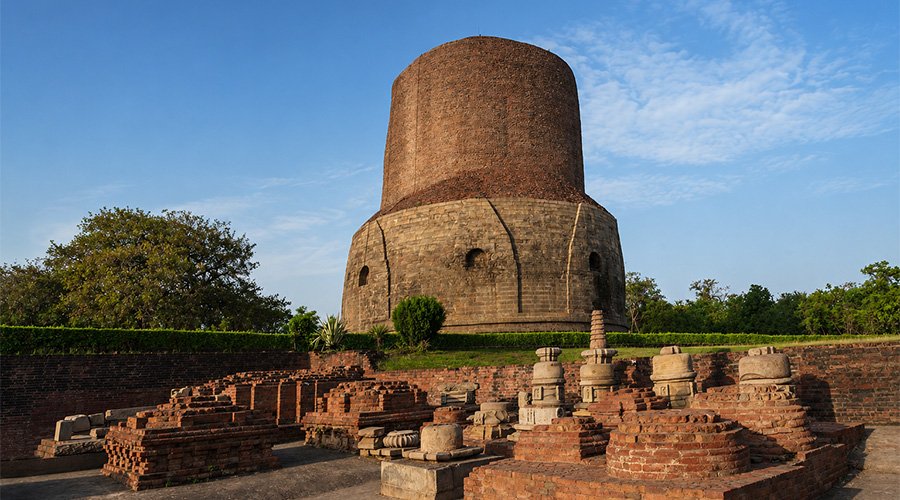
Dhamek Stupa

Gupta Period · 5th Century CE · 40+ Metres Tall

This massive, cylindrical stupa is the most impressive edifice in Sarnath, believed to mark the precise spot where the Buddha delivered his first discourse to his five disciples. The present structure dates back to the Gupta period (around 5th century CE), built on the foundation of an earlier Ashokan stupa. Its intricate floral and geometric carvings are a highlight of Buddhist art.

Chaukhandi Stupa
03
03

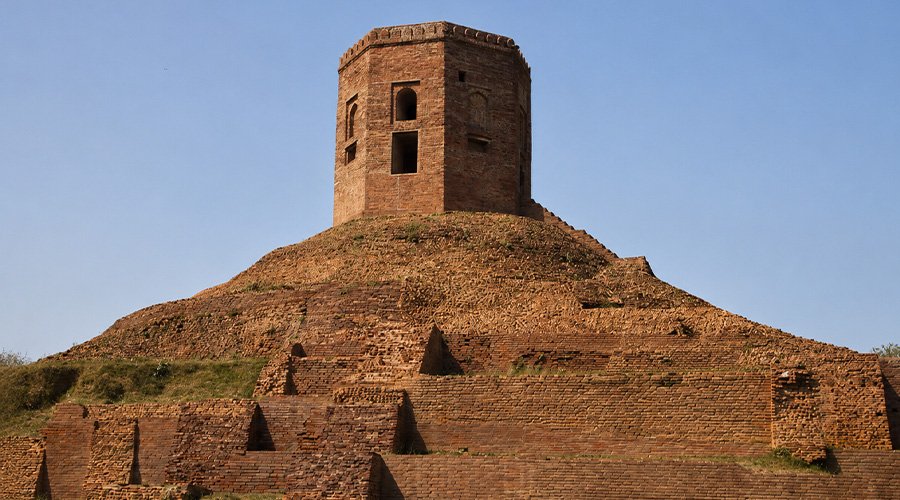
Chaukhandi Stupa

Where Buddha Met His Five Disciples · Mughal Tower, 1588

Located slightly separate from the main complex, this stupa marks the spot where Lord Buddha met his first five disciples. The octagonal tower atop the stupa was added much later by Mughal Emperor Akbar in 1588 to commemorate the visit of his father, Humayun — a rare confluence of Buddhist and Mughal heritage at a single monument.

Ashoka Pillar
04
04

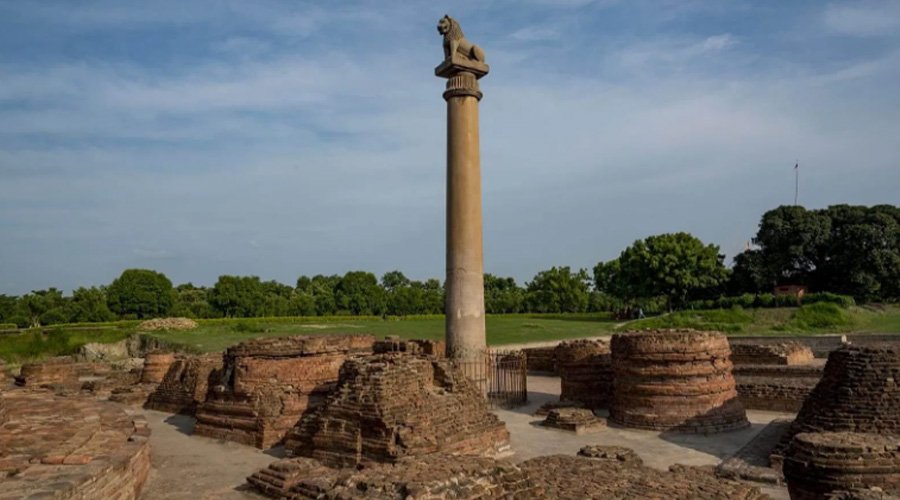
Ashoka Pillar Ruins

Erected by Emperor Ashoka · 249 BCE

The broken remnants of the original Ashoka Pillar stand amidst the ruins. Erected by Emperor Ashoka in 249 BCE, the pillar was originally crowned by the famous Lion Capital of Ashoka — now the National Emblem of India — which is displayed in the nearby Sarnath Archaeological Museum. An enduring symbol of India's ancient heritage.

Visiting Hours

Sunrise – Sunset (approx. 9:00 AM – 5:00 PM)

Entry Fee

Applicable for the main complex of ruins

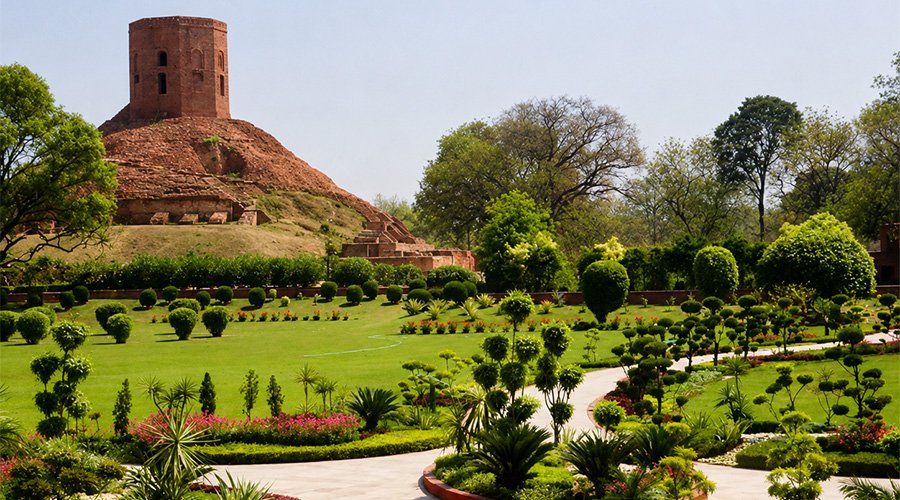
Garden of Spiritual Wisdom

9:30 AM – 5:00 PM Behind Chaukhandi Stupa · Free entry

अन्य आकर्षण

Other Key Tourist Attractions

Sacred temples, living monasteries and world-class heritage at Sarnath

Archaeological Museum
01

Sarnath Archaeological Museum

10:00 AM – 5:00 PM  ·  Closed Fridays

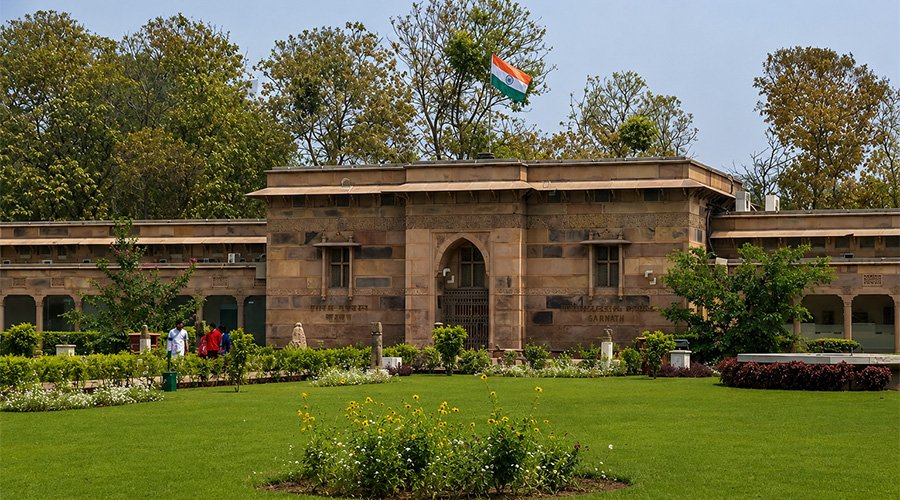
Established to house antiquities excavated from Sarnath, this museum is a must-visit. Its most prized possession is the original Lion Capital of Ashoka — India's National Emblem — alongside a magnificent collection of Buddhist sculptures and artifacts from the 3rd century BCE to the 12th century CE, including the famous Seated Buddha Preaching his First Sermon. A separate entry fee applies.

Mulagandha Kuti Vihara
02

Mulagandha Kuti Vihara

Maha Bodhi Society  ·  Opened 1931

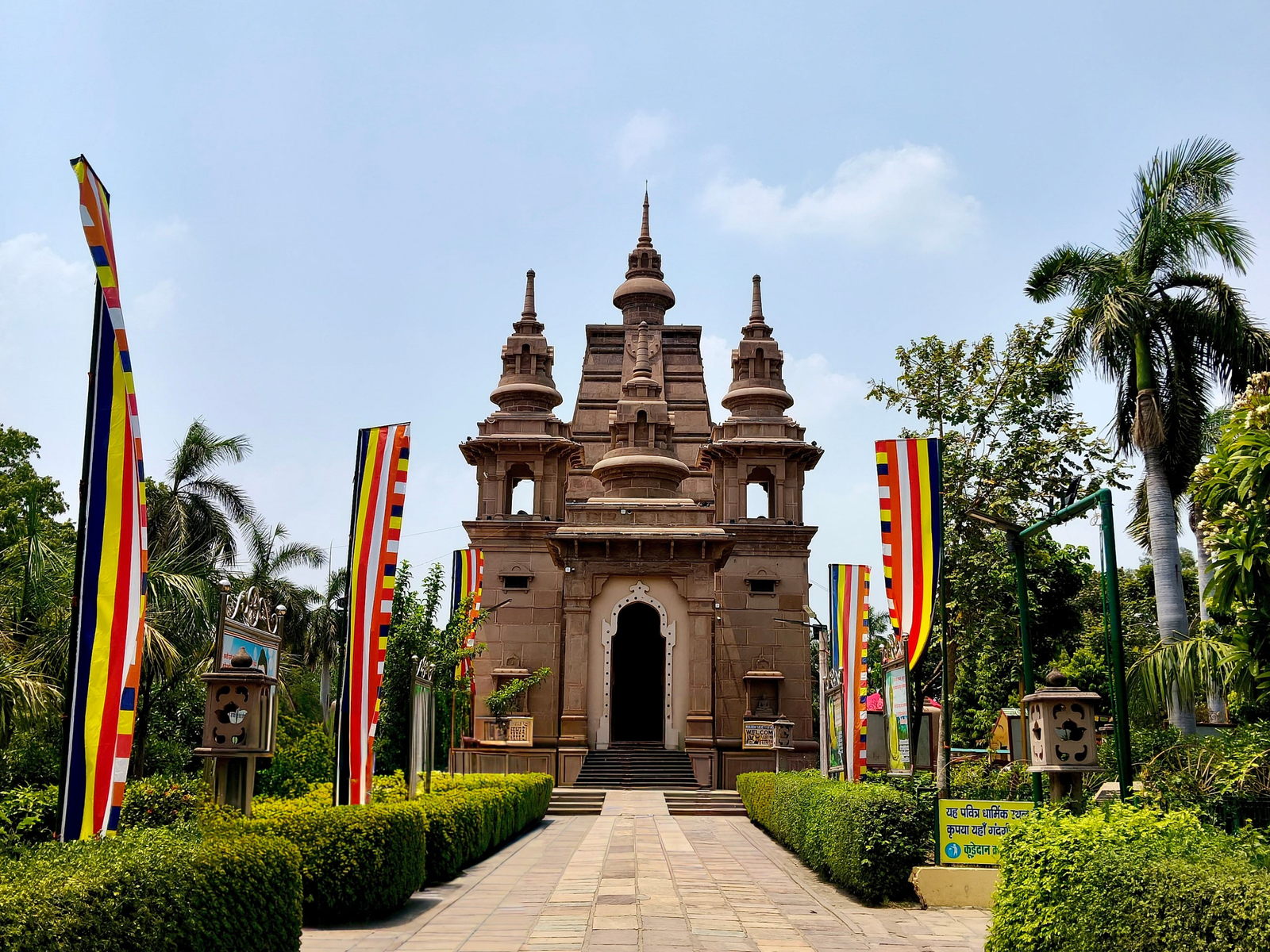
A modern, exquisite Buddhist temple built near the site of the original residence of the Buddha during his stay in Sarnath. The Vihara's interior walls are richly decorated with beautiful frescoes by Japanese artist Kosetsu Nosu, depicting key events from the Buddha's life. A Bodhi Tree grown from a cutting of the original tree at Bodh Gaya is also planted nearby.

Monasteries & World Temples
03

Monasteries & World Temples

Tibetan  ·  Thai  ·  Japanese  ·  Chinese

Sarnath hosts several temples and monasteries built by different Buddhist nations in their respective architectural styles, offering a glimpse into the rich diversity of the world's Buddhist traditions. Each temple is a window into a unique cultural and spiritual heritage, united by the sacred soil of this ancient ground.

Jain Temple
04

Jain Temple

Birthplace of Shri Shreyansanath, 11th Tirthankara

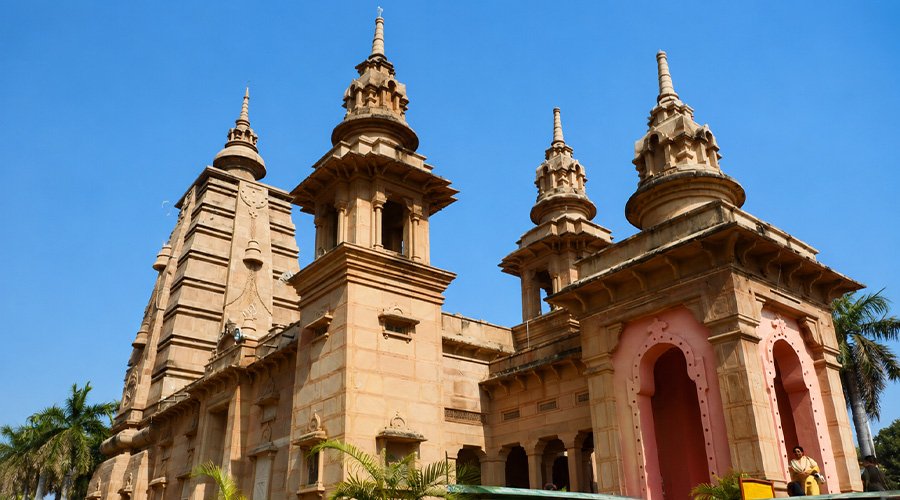
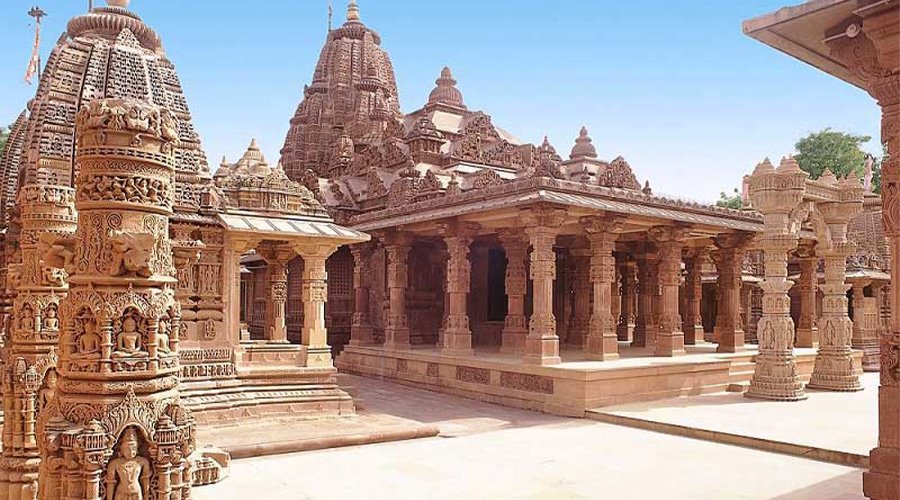
Sarnath is also deeply significant for Jains, as it is the birthplace and site of the first sermon of Shri Shreyansanath, the 11th Jain Tirthankara. A Jain temple honouring him stands here as a notable pilgrimage stop, drawing devotees from the Jain community from across India and the world.

Tweaks